
Skills & Education
Robotics education is moving from programming to systems thinking
A new university-led curriculum shows why future automation skills must cover complete applications, data and responsible deployment - not only robot code.
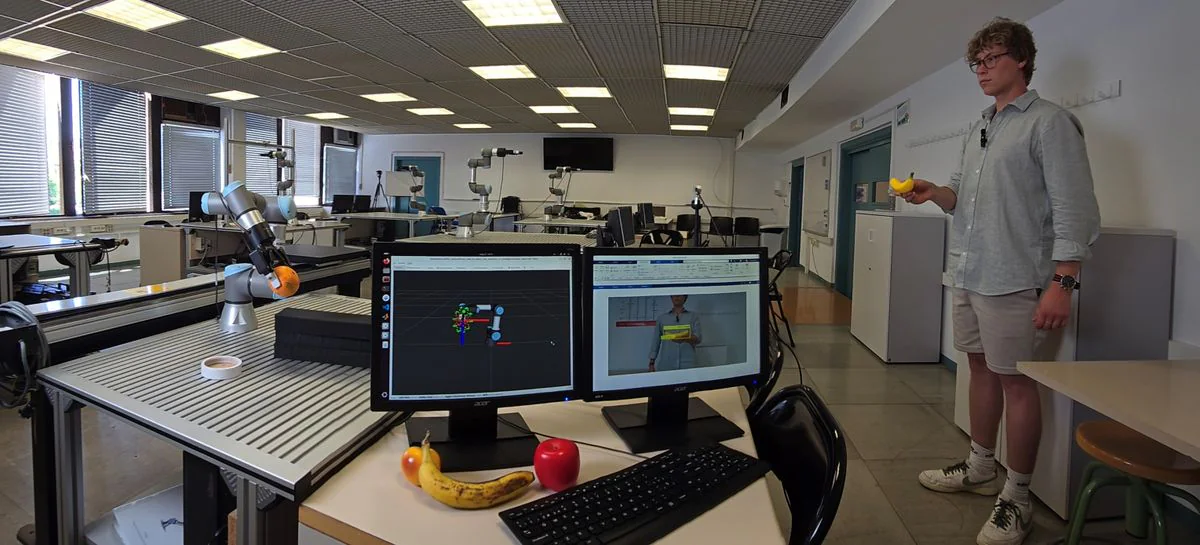
Universal Robots has highlighted a free university-built curriculum designed for a fast-changing, AI-influenced robotics industry. Its broader significance is the shift from teaching isolated programming skills toward understanding how complete automation systems behave.
What is changing
Robot programming remains important, but modern automation work also demands knowledge of sensing, safety, data, tooling, validation and human interaction. Curricula that depend on one piece of hardware or one programming interface can age quickly.
The reported approach allows students to begin with concepts and simulation before physical equipment is available. That makes learning more accessible and keeps attention on transferable engineering principles.
Why industry should care
Manufacturers do not only need more robot programmers. They need operators who can recover a cell, technicians who understand interfaces, engineers who can evaluate feasibility and managers who can distinguish a convincing demonstration from a dependable production process.
Training becomes most useful when it reflects the roles around a real cell and gives people the confidence to make controlled changes without weakening safety or quality.
The Multitech view
The strongest training combines structured fundamentals with hands-on application work. Learners should see how payload, reach, fixtures, cycle time, risk assessment and operator routines affect one another.
That is why an authorised training centre should be more than a classroom. It should connect learning to the decisions people will make on the factory floor.
Practical takeaways
- Teach the complete application, not only robot motion.
- Use simulation to widen access, then validate learning hands-on.
- Design training around operator, technician and engineering responsibilities.
This briefing is an original Multitech editorial summary based on the linked primary source. Product claims and figures remain attributable to that source.