
Standards & Safety
Robot cybersecurity becomes a cell-design question
KUKA’s new security certification is a useful reminder that connected automation must be engineered for digital resilience as well as physical safety.
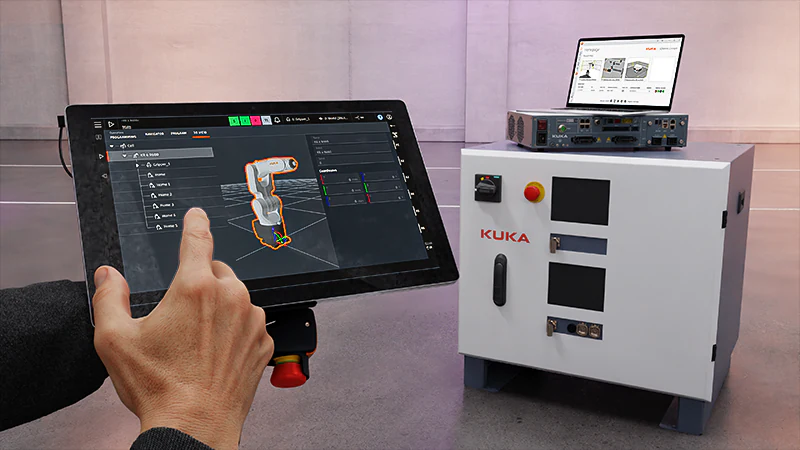
KUKA says its iiQKA.OS2 robot systems have achieved Security Level 2 certification under IEC 62443-4-2. For manufacturers, the important message extends beyond one robot brand: cybersecurity is becoming part of the automation specification.
What changed
Modern robot cells are increasingly connected to production networks, remote service tools, data platforms and other machines. KUKA’s certification covers technical security requirements for industrial automation components and arrives as the EU Cyber Resilience Act raises expectations for products with digital elements.
The announcement also links the platform to EN ISO 10218-1:2025, bringing digital resilience and established machinery-safety thinking into the same product conversation.
Why manufacturers should care
A robot arm can be mechanically safe while the complete application remains digitally exposed. Default credentials, unmanaged remote access, outdated software and poorly separated networks can create production risk long after commissioning.
This is especially relevant for collaborative cells because they are often flexible, frequently reconfigured and connected to a broader ecosystem of cameras, grippers, PLCs and cloud services.
The Multitech view
Cybersecurity should enter the project during concept design, not during the final IT handover. A dependable cell needs defined network boundaries, controlled user roles, documented update responsibilities, recoverable backups and a clear method for approving remote support.
Certification is a valuable signal, but it does not secure an application by itself. The integration choices around the robot determine how well the complete production system can resist and recover from disruption.
Practical takeaways
- Include cybersecurity requirements in the original cell specification.
- Document ownership of accounts, updates, backups and remote access.
- Assess every connected component, not only the robot controller.
This briefing is an original Multitech editorial summary based on the linked primary source. Product claims and figures remain attributable to that source.